Jan De Nul Launches World’s Largest Subsea Cable-Laying Vessels
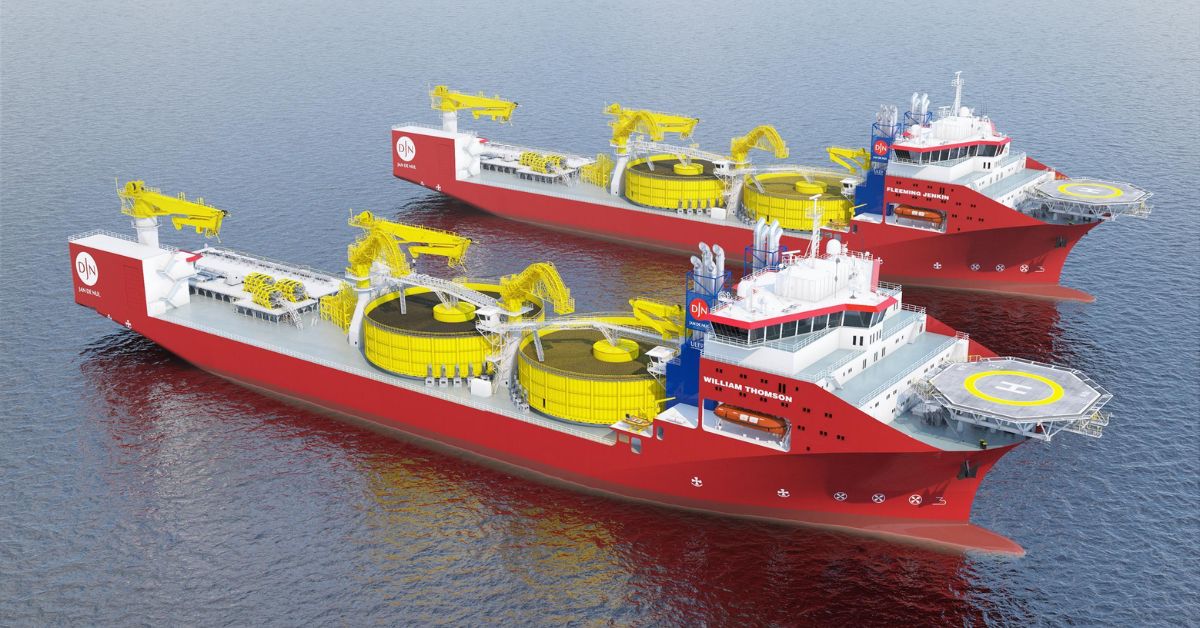
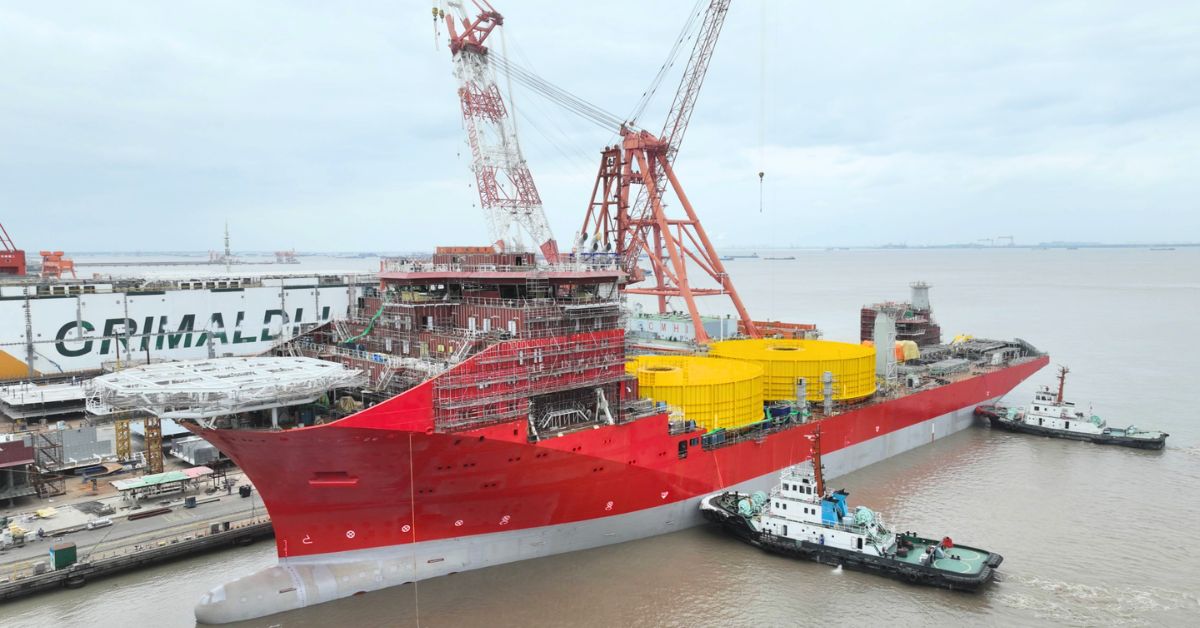
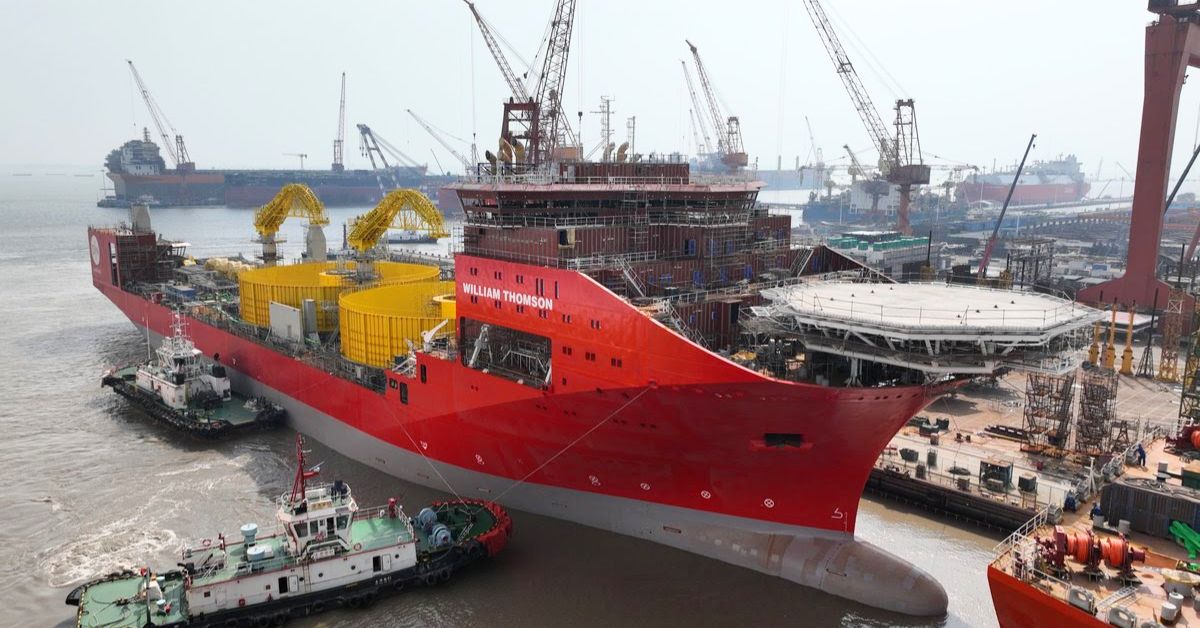
Jan De Nul has launched another next level high-performance vessel: the William Thomson, one of two identical subsea cable‑laying vessels currently under construction. Both vessels have a cargo capacity of 28,000 tonnes and a length of 215 metres. This makes them the largest of their kind.
Subsea cables are needed to bring energy generated at sea ashore and to connect the electricity grids between different countries and regions. This is essential for building a reliable energy network based on renewable sources, enabling electricity to flow easily from areas of surplus to areas of shortage.
Laying cables at depths of up to 4,000 metres
Jan De Nul’s two new cable-laying vessels have been specially built to install these cables, both in shallow and ultra-deep waters down to 4,000 metres. Thanks to their large loading capacity, they can take longer cables on board in a single piece and bridge longer distances with as few subsea cable connections as possible. Compared to other cable-laying vessels on the market, they therefore also need to make fewer return trips to load cables. This reduces costs, minimises the environmental footprint and enhances cable quality.
Entirely self-designed
Sister vessel Fleeming Jenkin was launched in October 2025 and her delivery is scheduled for the last quarter of 2026. The William Thomson will follow shortly and will be operational in the first half of 2027. Both vessels and the technologies on board have been designed by Jan De Nul’s in-house experts.
Wouter Vermeersch, Director Subsea Cables Offshore Energy at Jan De Nul: “The William Thomson and its identical sister, the Fleeming Jenkin, bring together all the expertise in cable installation that we have built up over the past fifteen years. They are the highest-performing and most efficient cable-laying vessels on the market.”
First assignment: over 2,800 kilometres of subsea cables for TenneT
Once operational, the Fleeming Jenkin and William Thomson can immediately get to work on their first assignments.
Their first project is the 2GW programme by TenneT, the grid operator for the Netherlands and large parts of Germany. This introduces a new generation of grid connections for offshore wind farms, each capable of transporting up to two gigawatts. That is more than double the capacity of current connections, which typically range between 700 and 900 megawatts, making offshore wind energy more efficient and affordable. By way of comparison, an average nuclear power station typically generates between 1 and 1.6 gigawatts.
For this programme, Fleeming Jenkin and William Thomson will install more than 2,800 kilometres of 525 kV DC cables for four different grid connections.
Three AC cables for Princess Elisabeth Island in Belgium
In 2028, Jan De Nul will also deploy one of these new cable-laying vessels to install three 220 kV DC cables that will connect the Princess Elisabeth Island to shore. This energy island, which Jan De Nul is building in a joint venture for grid operator Elia, will bundle the cables from Belgium’s second offshore wind zone (Princess Elisabeth Zone) and enable a stronger interconnection between the North Sea countries.
Five more vessels on the way
Jan De Nul is investing heavily in the expansion of its existing subsea cable capacity. In addition to the two vessels for installing these cables, three more vessels will be added to protect them: two trenching support vessels to bury cables in the seabed and a rock installation vessel that protects the cables with a layer of rock.
This means that Jan De Nul has five additional vessels for the installation and protection of subsea cables on the way.
Wouter Vermeersch: “Reliable, affordable and renewable energy, independent of geopolitical tensions, is one of the most important societal challenges of our time. With this wave of investments, we are strengthening our capacity to help build solutions.”
Press Release
Want to read more?
Check out the full article on the original site