U.S. Intercepts Sanctioned Merchant Vessel In Arabian Sea, Redirects Ship Back To Iran
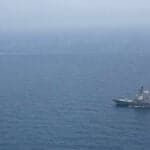


The United States intercepted a sanctioned merchant vessel in the Arabian Sea on Saturday and ordered it to turn back toward Iran under escort, according to U.S. Central Command (CENTCOM).
The vessel, M/V Sevan, was among 19 ships recently sanctioned by the U.S. Treasury Department for transporting Iranian oil, gas, propane and butane to foreign markets as part of what the United States describes as Iran’s “shadow fleet.”
CENTCOM said the vessel was intercepted by a U.S. Navy helicopter operating from guided-missile destroyer USS Pinckney (DDG 91).
The command said the ship was complying with military instructions to turn back to Iran under escort.
According to CENTCOM, the interception is part of the ongoing U.S. naval blockade targeting ships entering or departing Iranian ports.
The command said 37 vessels have been redirected since the blockade began.
In a statement posted on X, CENTCOM said the Sevan was sanctioned for activities linked to transporting billions of dollars’ worth of Iranian energy products, including propane and butane, to foreign markets.
Earlier on Saturday, U.S. Secretary of War Pete Hegseth said the naval blockade now extends beyond the Gulf of Oman into other waters and is being enforced by the U.S. Navy.
He said vessels identified under U.S. screening criteria, including those linked to Iranian ports, have been turned around as part of the campaign.
Hegseth also said 34 non-Iranian merchant vessels had been permitted to continue transit after screening procedures.
According to his remarks, enforcement actions have also taken place in the Indo-Pacific, where two vessels linked to Iran were seized after leaving Iranian ports before the blockade started.
He said another aircraft carrier will join the naval deployment in the coming days as the United States continues measures targeting Iranian shipping.
The interception of Sevan adds to increasing action against Iran’s so-called shadow fleet, a network of vessels often cited in sanctions enforcement involving energy shipments.
The U.S. Treasury has imposed sanctions on numerous ships and entities alleged to support those trades.
Maritime security analysts are closely watching whether the blockade and repeated vessel redirections affect commercial traffic patterns across the Arabian Sea and surrounding regional routes, particularly those tied to energy flows.
The Arabian Sea remains a critical corridor for tanker traffic moving between the Gulf, Asia and global energy markets.
References: Reuters, US Centcom
Want to read more?
Check out the full article on the original site